Manuel Lagoa, originally from Spain, lives and works in France.
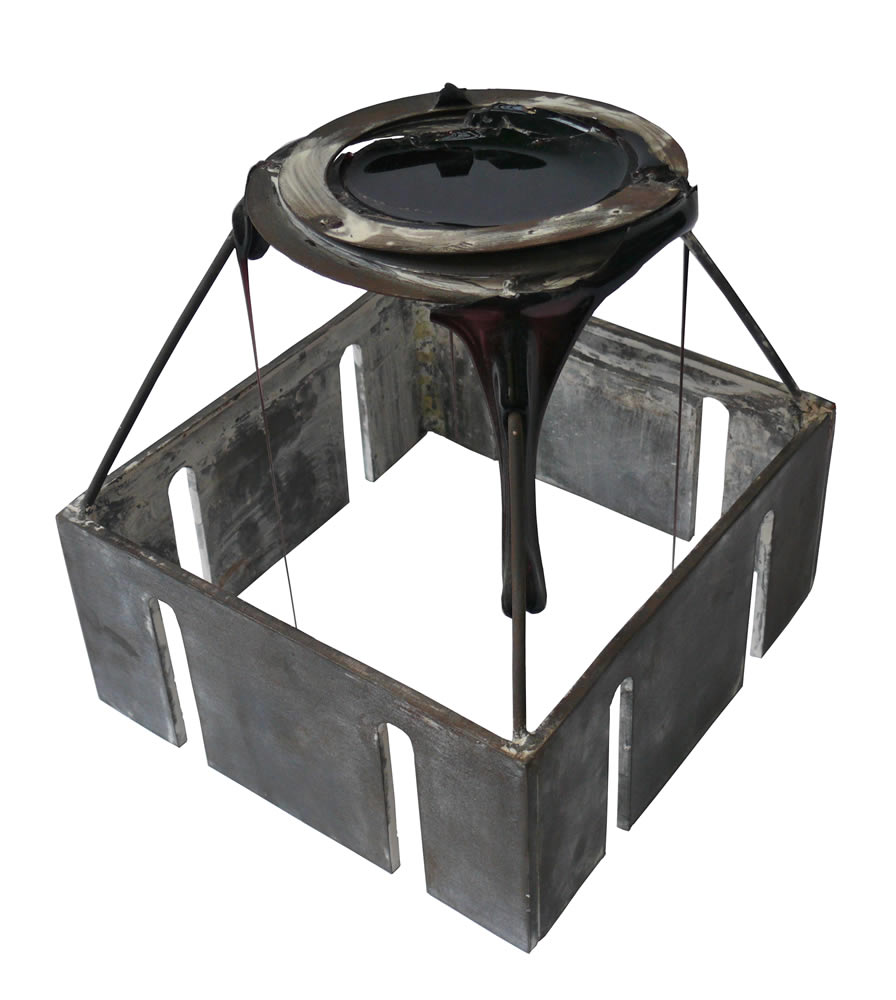
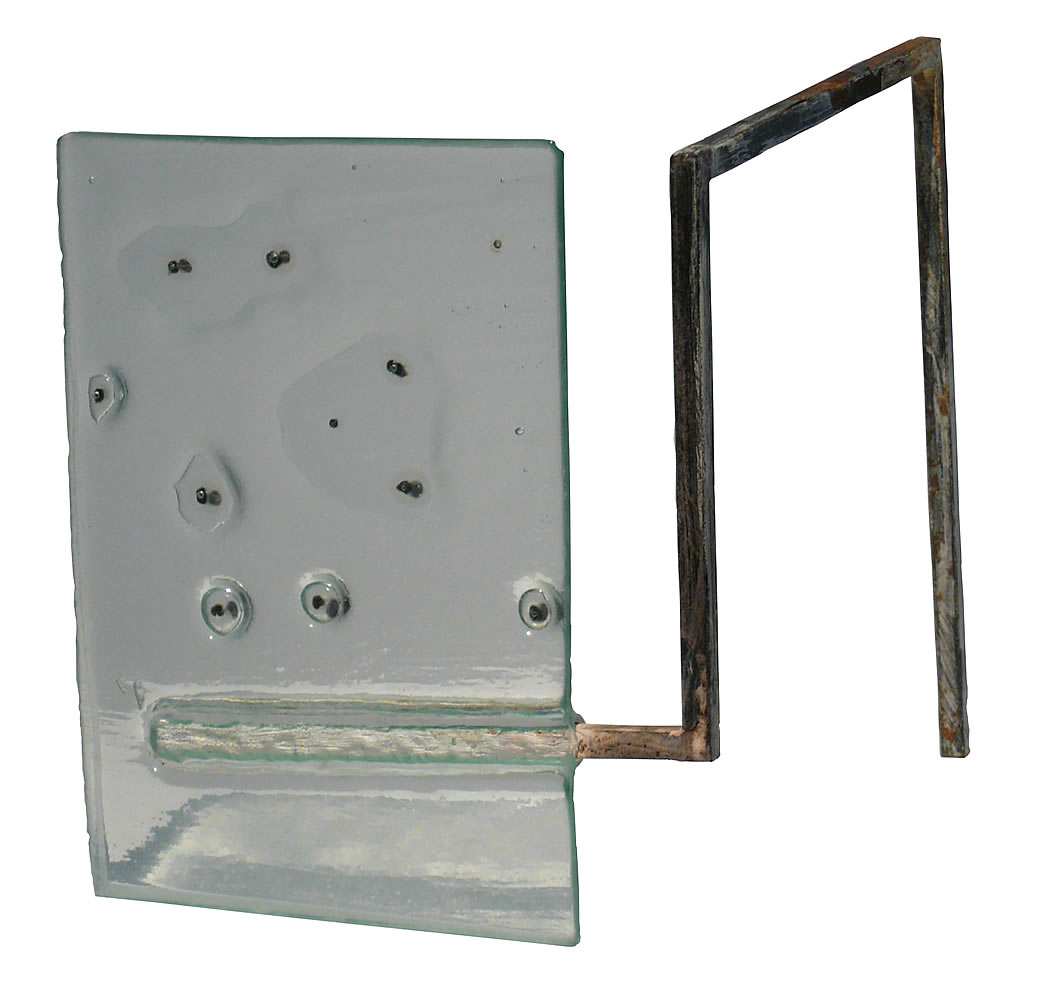
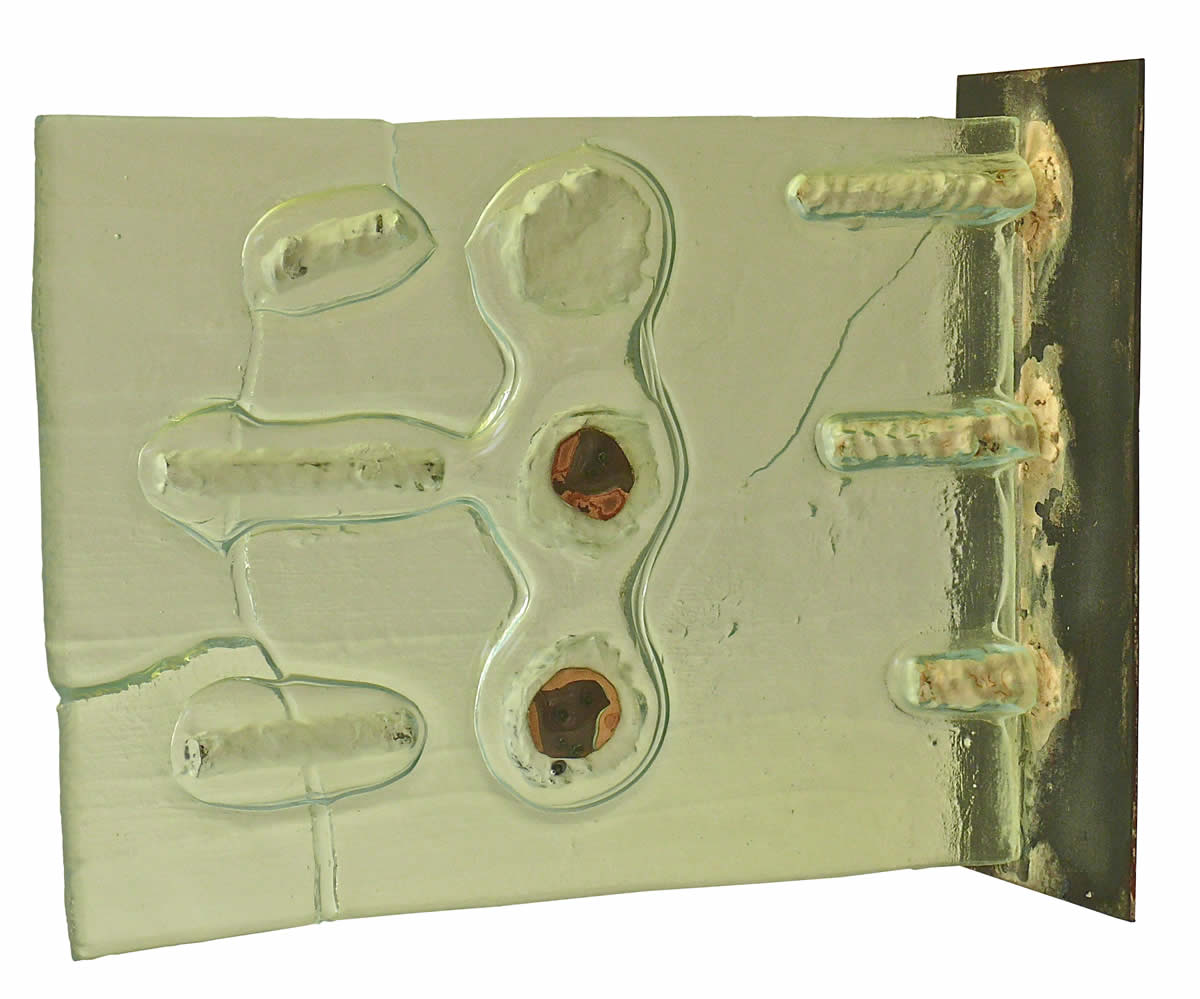
He lived in Italy between 1989 and 1993 where he profited from the presence of the famous artist Miguel Berrocal. It was then he began a period of research and experimentation in form and in the use of materials of opposing qualities such as metal and glass. By fusing glass bottles he made such installations as his “Line of Fire”, a flame on a six-meter wick, “Qu’attendez-vous?” and “Tetes” that he completed in Oldenburg, Germany in 1993.
In 1990 he showed his work “Metal and Glass” for the first time at the “Graffiti Now Atelier” in Verona. His sculptures, formerly neo-figurative and abstract, were now in a geometric abstraction style. The relationship between the full and the empty, the opaque and the transparent are emphasized. He has abandoned organic forms and plays with instability achieving a perfect equilibrium of form. Glass becomes the sustaining element of the sculptural unity.
His work and projects have been cited by Susana Fernandez in her book “Artists, Sculptors, neo-Figurations – Abstractions ” edited in Spain in 2004.
A thread of steel, perforated glass, a bottle crafted or fused with something else, a line of fire, globes of helium, captors of solar energy, stone, wood combined with new technologies make up his sculptures.
In 2007 in Corsica, Manuel Lagoa set up the installation “Monsantos” that denounces what the artist considers the neo-imperialism of multinationals.
His work can be found in many private and public collections in Belgium, Brazil, Croatia, Denmark, England, France, Germany, Greece, Northern Ireland, Italy, Spain, and enriches urban spaces in Europe (Denmark, Croatia, Spain).
The new works featured on this page express the artist's unease in these times of violences and wars. Works in progress inspired by Giovanni Pisano’s ‘The Massacre of the Innocents’ on the one hand, and a call to listen to nature on the other, entitled ‘The Voice of the Mountain’. The ‘Canals of Mars’, dedicated to the astronomer Schiapparelli, are studies from the collection previously exhibited in Venice in 2017.
For technical informations, price and sale conditions please contact: